Honeysuckle Absolute and Candle Making: Frequently Asked Questions
Honeysuckle absolute shows up in a lot of candle maker forums, usually with the same question attached: does this actually work in wax, or is it strictly a perfumer's ingredient? We get versions of this honeysuckle absolute candle FAQ constantly, from hobbyists testing their first small batch to people who've been pouring soy candles for years and want a truer floral than anything in a fragrance oil catalog. Below we've grouped the honeysuckle candle scenting questions we hear most often, organized by theme so you can jump to what you need.
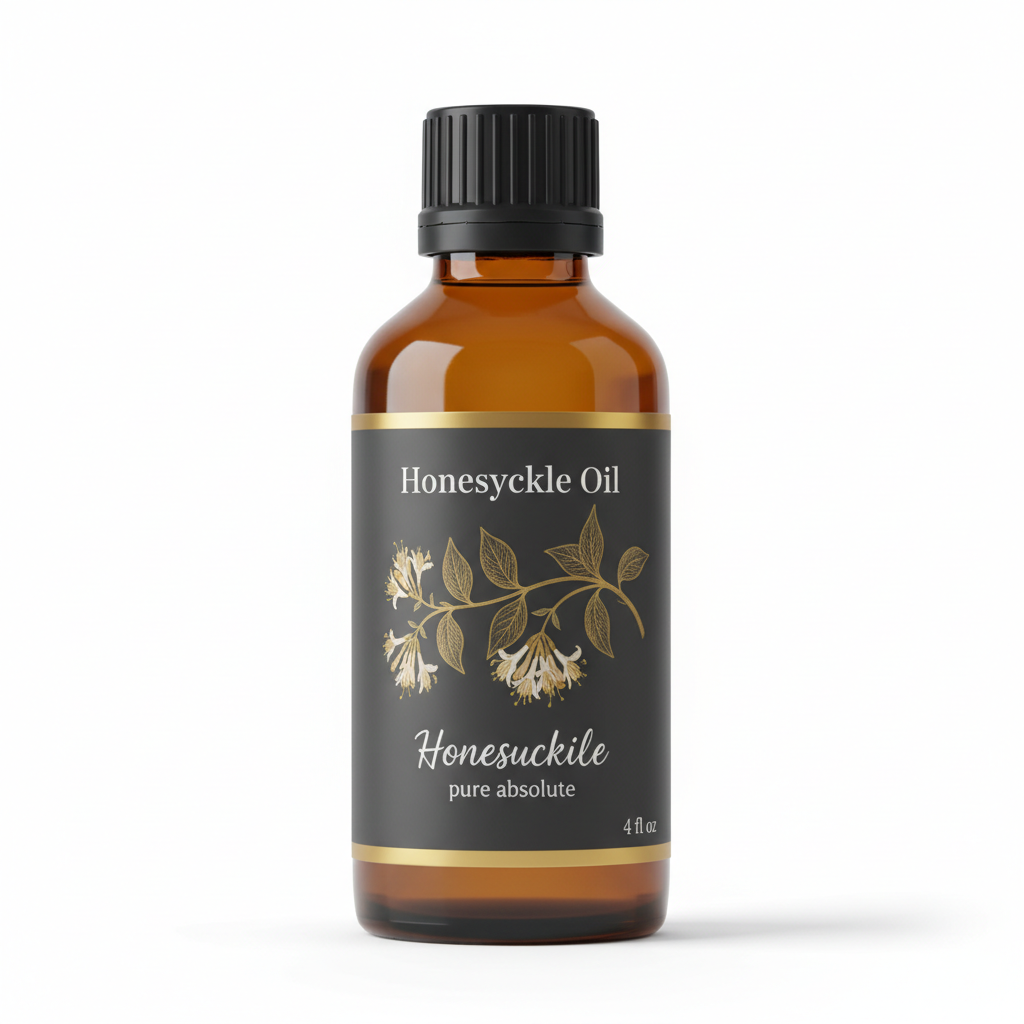
Honeysuckle Absolute
Our own Honeysuckle Absolute, in sizes from 0.5 oz to bulk.
From $13.99
Shop Now →A quick framing note before we dive in: everything here is about scent, wax behavior, and craft technique. Honeysuckle absolute is a botanical extract used for its aroma and cosmetic applications, not a wellness or medical product, and nothing below should be read as a claim about health outcomes.
The Basics: Can You Put Absolute in Candles?
Can you put absolute in candles?
Yes. Honeysuckle absolute can be used as a candle fragrance, and many independent candle makers prize it precisely because true honeysuckle essential oil doesn't really exist commercially (the flower doesn't hold up to steam distillation, which is why there is no steam distilled honeysuckle essential oil on the market). The absolute is the closest thing to the real flower's scent you can pour into wax. That said, it behaves differently from a synthetic fragrance oil formulated specifically for candles, so a bit of testing is worth the effort.
What exactly is honeysuckle absolute, in candle-maker terms?
It's a concentrated aromatic extract pulled from honeysuckle blossoms using a solvent extraction process, not steam distillation. For a full walkthrough of that method, see what is an absolute: solvent extraction explained. The result is a thick, deeply colored liquid that carries the true floral profile of the flower rather than an approximation of it.
Why do people bother with absolute when fragrance oils are so much cheaper?
Mostly for the scent itself. Fragrance oil houses have never fully cracked a convincing honeysuckle note, and most "honeysuckle" candles on the shelf lean heavily on a generic white floral or fruity-floral accord. If you want something closer to a real vine in bloom, the absolute is the more honest ingredient, even though it costs considerably more per ounce. We break down that price gap in our honeysuckle absolute price guide.
Is honeysuckle absolute the same thing as honeysuckle essential oil?
No, and the distinction matters for candle work specifically. "Essential oil" implies steam or CO2 distillation, and honeysuckle flowers yield almost nothing that way. Anything labeled "honeysuckle essential oil" at a low price point is very likely a fragrance oil or a diluted absolute mislabeled for marketing purposes; our guide to spotting fake honeysuckle oil covers the red flags in detail.
Absolute vs Fragrance Oil Candles: The Core Debate
What's the real difference between absolute and fragrance oil candles?
Fragrance oils are engineered blends of synthetic and sometimes natural aroma compounds, built specifically to perform well in wax: strong cold throw, strong hot throw, predictable flash points, and consistent batch-to-batch results. Absolute is a single-source botanical extract that was never designed with candle chemistry in mind, so it can be less potent per drop and less reliable in throw. We compare the two side by side in honeysuckle absolute vs honeysuckle fragrance oil.
Which one smells more like real honeysuckle in a finished candle?
Absolute, almost without exception. Fragrance oils marketed as honeysuckle tend toward a sweeter, rounder, more generalized floral that can read as honeysuckle-adjacent rather than honeysuckle itself. Absolute carries the honey-green, slightly indolic character of the actual flower, which is subtler and less "loud" in a room than most fragrance oil formulations.
| Factor | Honeysuckle Absolute | Honeysuckle Fragrance Oil |
|---|---|---|
| Scent accuracy | True to the flower | Approximated, often sweeter |
| Cost per ounce | Significantly higher | Lower, mass-produced |
| Batch consistency | Varies with harvest and origin | Formulated for consistency |
| Hot throw strength | Moderate, needs testing | Engineered for strong throw |
| Wax compatibility testing | Recommended, ingredient-specific | Usually pre-tested by supplier |
Can I blend absolute and fragrance oil in the same candle?
Yes, and it's a common workaround. A small percentage of honeysuckle absolute layered into a compatible white floral or green fragrance oil base can round out the top notes with something more botanically honest, while the fragrance oil carries the bulk of the throw. Start with the absolute at a low percentage of your total fragrance load and adjust from there.
Is one option more natural than the other?
Absolute is derived directly from the plant material, while fragrance oil is typically a lab-formulated blend, so absolute is the more botanically sourced option of the two. That distinction is about origin and formulation, not about safety or superiority; both, used correctly, are common ingredients in candle making. If sourcing transparency matters to you, look for suppliers who publish extraction method and origin, similar to what we outline in reading an absolute's label before you order.
Scenting Technique: Ratios, Timing, and Method
How much honeysuckle absolute should I use per pound of wax?
Most candle makers working with absolutes start around 6 to 8 percent of total wax weight and adjust after a burn test, since absolutes tend to have a lower perceived throw than fragrance oils at the same weight. Our full walkthrough, including a sample recipe, is in how to scent soy candles with honeysuckle absolute. Always weigh rather than measure by volume, since absolute is thick and inconsistent to pour precisely.
At what temperature should I add the absolute to melted wax?
Add it once the wax has cooled to roughly 175 to 185°F rather than at full melt temperature, since prolonged exposure to high heat can degrade the more delicate aromatic compounds in a floral absolute faster than in a robust synthetic fragrance oil. Stir gently for a full minute or two to disperse it evenly before pouring. If your wax supplier lists a specific fragrance-add temperature for their blend, defer to that as the baseline and adjust downward slightly.
Does honeysuckle absolute dissolve fully in wax?
Mostly, but not always as cleanly as a fragrance oil formulated for wax solubility. Because absolutes carry natural waxes, resins, and pigments from the plant material, you may see slightly more separation or a faint color tint in the finished candle compared to a clear synthetic fragrance oil. This is a normal characteristic of a botanical extract rather than a sign of a bad batch, though it's worth doing a small test pour before committing a full batch.
Why does my finished candle smell weaker than the raw absolute?
This is the single most common honeysuckle candle scenting question we get, and it comes down to hot throw versus cold throw. Absolutes generally have a gentler hot throw than fragrance oils, meaning the scent that fills a room while the candle is burning is noticeably softer than what you smell straight from the bottle. Increasing the fragrance load slightly, choosing a larger wick size, and giving the candle a full burn to the edges (roughly two to three hours) all help maximize throw.
Should I let the candle cure before judging the scent?
Yes, and this matters even more with a natural extract than with a fragrance oil. Give soy and coconut wax blends at least one to two weeks of cure time at room temperature before burn testing, since the wax needs time to fully bind the aromatic compounds. Judging throw on a same-day pour is one of the most common reasons people conclude an absolute "doesn't work" when it just hasn't cured.
Wax, Wicks, and Compatibility
What wax works best with honeysuckle absolute?
Soy and soy-coconut blends are the most forgiving for beginners, since they hold fragrance oil and absolute reasonably well and pour at manageable temperatures. Straight coconut wax has excellent scent throw but can be pricier and less structurally stable on its own, so most candle makers blend it with soy for a coco-soy formula.
Can I use honeysuckle absolute in beeswax candles?
You can, but be aware beeswax carries its own naturally sweet, honeyed scent that will compete with and often dominate a delicate floral like honeysuckle. If you want the absolute's character to actually come through, a beeswax blend (partial beeswax cut with soy or coconut) will let more of the honeysuckle profile survive than pure beeswax will.
Will honeysuckle absolute work in a paraffin candle?
Paraffin generally has stronger scent throw than soy, so it can actually help compensate for an absolute's gentler hot throw. The tradeoff is that paraffin is a petroleum-derived wax, which some candle makers avoid for reasons unrelated to scent performance, so the choice usually comes down to your broader wax philosophy rather than a compatibility issue.
Do I need to size my wick differently for absolute versus fragrance oil?
Not dramatically, but because absolutes can run slightly thicker and heavier than fragrance oils, a candle scented with absolute may need to size up one wick step to maintain a full melt pool and adequate throw. Always run a proper wick test series (burning several wick sizes side by side) rather than assuming, since wax type, vessel diameter, and fragrance load all interact with wick performance.
Can honeysuckle absolute be used in wax melts instead of poured candles?
Yes, and wax melts are actually a forgiving format for absolutes since the wax is remelted repeatedly over a warmer rather than burned with a flame and wick. Use a similar fragrance load percentage as you would for a poured candle and expect the same gentler, more nuanced throw compared to a synthetic fragrance melt.
Sourcing, Storage, and Safety
Does the origin of the absolute affect how it performs in candles?
Yes, noticeably. Honeysuckle absolute is an agricultural product, and harvest year, growing region, and extraction house all shift the exact aromatic profile, sometimes leaning greener and more vegetal, other times sweeter and more honeyed. If consistency across batches matters for a product line, buy from a single supplier and request the same harvest lot when possible, and consider a wholesale relationship; see our wholesale honeysuckle absolute guide for what that process looks like.
How should I store honeysuckle absolute so it doesn't degrade before I use it?
Keep it in a dark glass bottle, tightly capped, away from direct light and heat, ideally in a cool cabinet rather than a hot workshop shelf. Absolutes are more delicate than most synthetic fragrance oils and can shift in scent over time if exposed to warmth or air; our detailed guide on how to store honeysuckle absolute covers shelf life expectations.
Is honeysuckle absolute safe to handle undiluted while making candles?
As with any concentrated botanical extract, avoid prolonged direct skin contact with the undiluted absolute and work in a ventilated space, wiping up spills promptly since it can stain fabric and porous surfaces. If you're also using the absolute for skin-adjacent projects like perfume oils or balms, always dilute properly and patch test first, as covered in honeysuckle absolute skin basics. For candle making specifically, standard workshop precautions (gloves, ventilation, keeping the workspace away from children and pets) are sufficient.
Should I label candles made with absolute differently than ones made with fragrance oil?
If you sell candles, yes: honest ingredient labeling is both good practice and, in many regions, a legal requirement. List the absolute by name rather than a generic "fragrance" designation, since customers who seek out true botanical scenting are specifically looking for that distinction and will value the transparency.
How do I know if the absolute I bought is genuine and not a diluted fake?
Genuine honeysuckle absolute is expensive, thick, deeply colored, and sold in small quantities, so a suspiciously cheap bottle labeled "pure absolute" at fragrance-oil pricing is a strong warning sign. Reputable suppliers disclose extraction method, origin, and batch testing; our guide to spotting fake honeysuckle oil walks through the specific labeling red flags to check before you buy.
What size bottle should a first-time candle maker buy to test?
Start small. A 5 to 10 milliliter bottle is plenty to run several small test pours across different wax types and fragrance loads before committing to a larger purchase for full production batches. Our sizing breakdown in your first bottle of honeysuckle absolute walks through cost per test batch so you're not overbuying before you know how the ingredient performs in your specific recipe.
Can I blend honeysuckle absolute with other florals in a candle?
Absolutely, and blending is where a lot of the character of a finished candle line comes from. Honeysuckle pairs particularly well with jasmine, gardenia, and green or citrus notes that echo the outdoor, growing-vine quality of the flower; see what blends well with honeysuckle for combinations worth testing in wax as well as in perfumery.
Final Notes on Working With This Ingredient
Honeysuckle absolute rewards patience more than most candle-scenting ingredients. It won't behave exactly like a fragrance oil built for wax, and it costs more, but for candle makers chasing the real scent of a vine in bloom rather than an approximation of it, it remains one of the more honest options on the market. Test small, cure fully, and adjust your fragrance load based on what you actually smell during a real burn, not just from the bottle.
If you're still deciding whether absolute is the right call for your next batch versus starting with a formulated fragrance oil, our broader overview of what honeysuckle oil is and how it's produced is a good next stop, along with the general honeysuckle oil FAQ for questions outside the candle-making scope.